
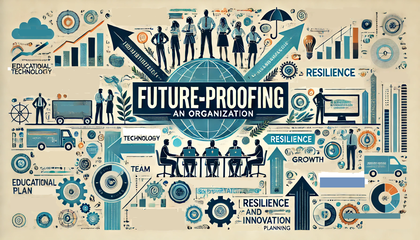
In an era defined by rapid digital evolution, the concept of “future-proofing” has shifted from a competitive advantage to a fundamental necessity for survival. Businesses that fail to adapt to technological shifts risk obsolescence, while those that strategically integrate emerging tools can unlock unprecedented resilience and growth. Future-proofing is not about predicting the future with certainty; rather, it is about building a flexible, scalable infrastructure capable of absorbing disruption and capitalizing on new opportunities. This article explores the critical technological pillars that underpin a truly future-ready enterprise.
1. Embracing Cloud-Native Architecture: The Foundation of Agility
The first and most critical step in future-proofing is migrating to a cloud-native architecture. Traditional on-premises infrastructure offers limited scalability and high maintenance costs, making it a liability in a volatile market. Cloud platforms like AWS, Azure, and Google Cloud provide the elasticity to scale resources on demand, enabling businesses to handle traffic spikes, launch new products, or enter new markets without significant capital expenditure. A robust cloud strategy also enhances disaster recovery and business continuity, ensuring operations remain uninterrupted during unforeseen events.
Key Benefits of Cloud Migration
- Scalability: Seamlessly adjust computing resources based on real-time demand.
- Cost Efficiency: Shift from capital-heavy expenses (CapEx) to operational expenses (OpEx) with pay-as-you-go models.
- Innovation Acceleration: Access advanced services like machine learning, IoT, and serverless computing without deep infrastructure expertise.
2. Leveraging Artificial Intelligence for Predictive Resilience
Artificial Intelligence (AI) and Machine Learning (ML) are no longer futuristic concepts—they are practical tools for mitigating risk and optimizing operations. AI-driven predictive analytics can forecast market trends, customer behavior, and supply chain disruptions, allowing leadership to make proactive, data-backed decisions. For instance, predictive maintenance in manufacturing reduces downtime by identifying equipment failures before they occur, while in retail, AI personalization engines boost customer retention by anticipating needs.
Practical AI Deployment Areas
3. Prioritizing Data Governance and Security Compliance
A future-proof business treats data as its most valuable asset—and its greatest vulnerability. With regulations like GDPR, CCPA, and emerging AI governance laws, non-compliance can result in crippling fines and reputational damage. Investing in a comprehensive data governance framework ensures data is accurate, accessible, and protected. This includes implementing end-to-end encryption, zero-trust security models, and regular compliance audits. A strong cybersecurity posture not only protects against breaches but also builds trust with customers and partners.
| Zero Trust | Verifies every access request, regardless of origin | Reduces lateral movement in breaches |
| Encryption | Protects data at rest and in transit | Mitigates data exposure risks |
| Multi-Factor Auth | Requires multiple verification methods | Prevents unauthorized access |
4. Fostering an Agile Tech Stack and Culture
Technology alone cannot future-proof a business; it must be paired with an organizational culture that embraces change. Adopting agile methodologies, DevOps practices, and continuous integration/continuous delivery (CI/CD) pipelines enables teams to release updates quickly and respond to feedback in real-time. This cultural shift reduces “technical debt”—the accumulation of outdated, inefficient code—which often cripples innovation. A modular tech stack, built on microservices, allows components to be replaced or upgraded independently without disrupting the entire system.
Signs of a Future-Proof Tech Culture
- Continuous Learning: Employees are encouraged to upskill in emerging technologies like quantum computing or edge AI.
- Cross-Functional Teams: Breaking down silos between IT, marketing, and operations fosters holistic problem-solving.
- Experimentation: Safe-to-fail environments allow rapid prototyping and iteration without fear of reprisal.
5. Integrating Ecosystem Partnerships and APIs
No business exists in a vacuum. Future-proof organizations recognize the power of interconnected ecosystems. Using APIs (Application Programming Interfaces), companies can integrate with partners, suppliers, and third-party platforms to create seamless value chains. For example, a logistics company integrating with a weather API can reroute shipments in real-time during a storm, while a financial firm using open banking APIs can offer personalized loan products. These integrations create network effects that amplify value as more connections are made.
Conclusion: The Ongoing Journey
Future-proofing your business with technology is not a one-time project but a continuous cycle of assessment, adaptation, and innovation. It requires leadership to stay informed about emerging trends such as edge computing, blockchain, and sustainable tech, while maintaining a clear focus on core business objectives. The most resilient enterprises are those that treat technology as an enabler of strategy, not a silver bullet. By investing in a cloud-native foundation, leveraging AI for resilience, prioritizing data security, fostering an agile culture, and building an ecosystem of partnerships, your organization can not only survive disruption but thrive in the face of it. The time to begin is now—the future waits for no one.

Related Posts