
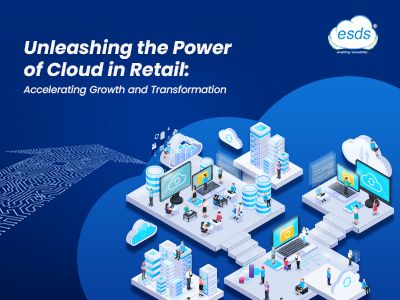
In the modern digital economy, cloud technology has evolved from a cost-saving utility into a strategic accelerator for business growth. Companies that strategically adopt cloud infrastructure are not merely reducing capital expenditure; they are fundamentally reshaping their operational agility, data intelligence, and market responsiveness. This article explores how cloud computing creates a competitive edge, focusing on scalability, innovation velocity, and data-driven decision-making.
1. Scalability Without Infrastructure Silos
Traditional on-premise systems require significant upfront investment and lengthy procurement cycles. Cloud platforms eliminate this friction by offering elastic scaling. Businesses can dynamically allocate compute resources, storage, and bandwidth based on real-time demand. This is critical for handling seasonal spikes, product launches, or sudden market expansions.
- Vertical Scaling: Instantly upgrade CPU, RAM, or storage within a single server instance.
- Horizontal Scaling: Distribute workload across multiple servers, ensuring redundancy and load balancing.
- Pay-as-You-Grow: Only pay for resources consumed, converting fixed costs into variable operational expenditures.
For example, an e-commerce platform using AWS Auto Scaling can handle a 10x traffic surge during Black Friday without downtime, then automatically reduce capacity afterward—preserving margins and customer experience.
2. Accelerating Innovation Through API-First Ecosystems
Cloud providers offer hundreds of managed services—from machine learning APIs to serverless computing—that enable rapid prototyping and deployment. This API-first architecture allows development teams to integrate advanced capabilities (e.g., natural language processing, predictive analytics) without deep in-house expertise.
Companies leveraging cloud-native CI/CD pipelines (like Azure DevOps or Google Cloud Build) can push code updates multiple times per day, fostering a culture of continuous improvement and customer feedback integration.
3. Data-Driven Growth with Real-Time Analytics
The cloud transforms data storage and analysis. Instead of batch-processing logs overnight, businesses can use streaming services (e.g., Amazon Kinesis, Apache Kafka on Confluent Cloud) to analyze customer behavior, supply chain movements, or IoT sensor data in real time. This capability underpins:
- Personalized Marketing: Dynamic content adjustment based on user session data.
- Predictive Maintenance: Reducing downtime in manufacturing through anomaly detection.
- Dynamic Pricing: Adjusting price points based on competitor data and demand elasticity.
Example: Cloud Data Lake Architecture
| Data Ingestion | AWS Kinesis, Google Pub/Sub | Ingest 1M+ events/sec from web, mobile, IoT |
| Storage | Amazon S3, Azure Blob Storage | Scalable, durable, low-cost object storage |
| Processing | Apache Spark on Databricks | ETL, machine learning, ad-hoc queries |
| Visualization | Power BI, Tableau | Self-service dashboards for executives |
This stack enables a retailer to analyze foot traffic patterns, inventory levels, and social media sentiment simultaneously—creating a 360-degree view of business health.
4. Enhanced Security and Compliance as a Growth Enabler
Many organizations hesitate to migrate due to security concerns. However, cloud providers invest billions in physical security, encryption, and compliance certifications (SOC 2, ISO 27001, HIPAA, GDPR) that far exceed what most on-premise teams can achieve. Key capabilities include:
- Identity and Access Management (IAM): Granular permissions for users, roles, and devices.
- Encryption at Rest and in Transit: Automatic key rotation and hardware security modules (HSMs).
- Zero Trust Architecture: Continuous verification of every access request, regardless of network location.
Security in the cloud is a shared responsibility model: the provider secures the infrastructure, while the customer secures their applications and data. By leveraging cloud-native security tools (e.g., AWS GuardDuty for threat detection), businesses can reduce breach risk by up to 40% according to recent industry benchmarks.
5. Cost Optimization and Business Agility
Beyond initial savings, cloud technology enables ongoing cost optimization through:
Agility is equally critical. Cloud-based disaster recovery (DR) solutions, such as multi-region failover, ensure business continuity with Recovery Time Objectives (RTOs) measured in minutes—not days. This resilience directly protects revenue streams and brand reputation during outages.
Conclusion
Cloud technology is not a one-time migration project; it is an ongoing strategic partnership that fuels business growth. From enabling hyper-scalability and real-time analytics to reducing operational risk and fostering innovation, the cloud provides the digital foundation upon which modern enterprises build their future.
Actionable next step: Conduct a cloud readiness assessment. Identify three workloads—ideally one customer-facing, one internal, and one data-intensive—and pilot a migration using a multi-cloud or hybrid approach. Measure outcomes against pre-defined KPIs (e.g., deployment speed, cost per transaction, uptime). The organizations that treat cloud as a growth engine, rather than a utility, will lead their markets in the decade ahead.

Related Posts