
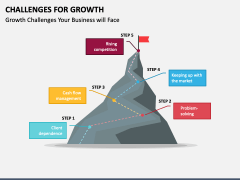
Scaling a technology business is rarely a linear trajectory. As companies evolve from early-stage startups to mature enterprises, they encounter a series of structural and operational bottlenecks that can stall momentum. Understanding these growth challenges is not merely an exercise in risk management—it is a prerequisite for sustainable expansion. Below, we dissect the most pervasive obstacles that tech firms encounter and offer professional frameworks for overcoming them.
1. The Product-Market Fit Disconnect
The initial euphoria of securing early adopters often masks a critical truth: your product may not resonate with a broader audience. Many businesses mistake vanity metrics—such as high download numbers or trial sign-ups—for genuine market validation. The challenge emerges when scaling acquisition costs rise faster than customer lifetime value, exposing a shallow product-market fit.
To mitigate this, leaders must rigorously segment their user base. Retention rate, not activation rate, is the true north metric. Conduct iterative feedback loops with your highest-value customers and resist the urge to expand features prematurely. A lean, high-retention product will always outperform a bloated offering with churn.
2. Talent Acquisition and Organizational Scaling
As revenue climbs, so does the complexity of hiring. The single biggest bottleneck for tech businesses is often not capital, but the availability of specialized talent. The competition for senior engineers, product managers, and data scientists is fierce, and cultural dilution becomes a real threat with rapid headcount growth.
Consider implementing a tiered hiring strategy:
- Core team: Invest in senior leaders who can architect scalable systems.
- Growth layer: Hire for specific, high-leverage roles (e.g., DevOps, security) that directly impact operational efficiency.
- Flexible capacity: Leverage contract experts or agencies for non-core functions.
Moreover, documenting your operational playbook as you grow ensures that tribal knowledge does not become a liability when key employees depart.
3. Infrastructure and Technical Debt
In the pursuit of speed, many tech companies accumulate technical debt—rushed code, monolithic architectures, and inadequate testing suites. This debt compounds exponentially. A startup that ships features weekly can find itself unable to deploy a single update without system-wide failures within two years of scaling.
The financial impact is stark:
| Deployment frequency | Daily | Weekly or less |
| Mean time to recovery | < 1 hour | > 24 hours |
| Engineering time on maintenance | < 20% | > 60% |
Proactive refactoring and investing in automated testing infrastructure are non-negotiable. Allocate at least 20% of engineering hours to debt reduction—this is not inefficiency; it is strategic risk mitigation.
4. Cash Flow Management at Scale
Rapid growth is capital-intensive. While venture funding can mask underlying cash flow issues, mismanagement here is the leading cause of scaling failure. Profitability does not equal liquidity. A business may be profitable on paper yet unable to meet payroll due to slow-paying enterprise clients or inventory mismatches.
Key controls to implement:
5. Market Saturation and Competitive Pressure
A growing market attracts competitors. When differentiation erodes, pricing power erodes with it. The challenge here is to avoid commoditization while expanding your addressable market.
Successful tech companies navigate this by:
- Vertical specialization: Dominating a specific industry (e.g., healthcare fintech) rather than offering a generic platform.
- Network effects: Building products that become more valuable as more users adopt them, creating switching costs.
- Continuous innovation: Allocating a percentage of revenue (typically 10-15%) to exploratory R&D that may cannibalize your own products.
6. Leadership and Decision-Making Paralysis
As organizations grow, the founder-led decision-making model breaks down. The bottleneck becomes the CEO—or the top leadership team. Middle managers may lack authority, while executives become overwhelmed by the sheer volume of strategic questions.
To counter this, adopt a decentralized decision-making framework:
7. Customer Support and Churn Dynamics
At scale, the volume of support tickets can overwhelm teams, leading to longer resolution times and frustrated customers. Churn is the silent killer of growth. Acquiring a new customer costs five to seven times more than retaining an existing one, yet many businesses prioritize acquisition over retention in their growth phase.
Key metrics to monitor:
| Net Promoter Score (NPS) | > 50 | < 30 |
| First Response Time | < 1 hour | > 4 hours |
| Customer Churn Rate (monthly) | < 2% | > 5% |
Invest in self-service resources (knowledge bases, AI chatbots) and proactive outreach to at-risk accounts. A 5% reduction in churn can boost profits by 25% to 95% in many tech sectors.
Conclusion: Growth Is a System, Not an Event
Every business faces these growth challenges—the distinguishing factor is how leadership responds. Robust systems, disciplined financial controls, and a culture of continuous adaptation are the true accelerators. If you diagnose these bottlenecks early and act with surgical precision, your organization will not only grow but will do so with resilience. The question is not whether these challenges will arise, but whether you have the strategic clarity to meet them head-on.

Related Posts