

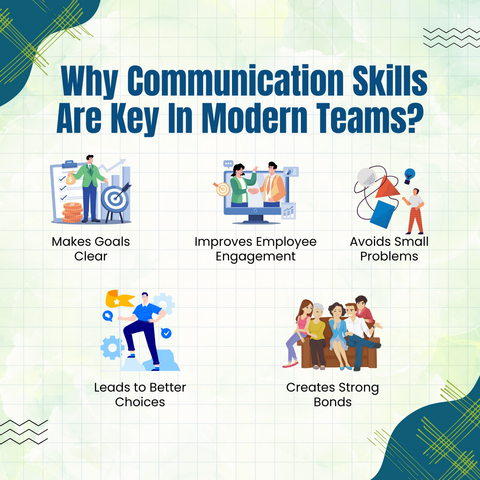
In the fast-paced world of technology, where distributed teams, rapid iteration cycles, and complex problem-solving are the norm, effective communication is not a soft skill—it is a critical engineering discipline. Poor communication leads to duplicated work, misaligned sprints, and costly production errors. This article outlines actionable strategies to transform team communication from a bottleneck into a performance multiplier.
1. Establish a Single Source of Truth
The most pervasive issue in tech teams is information fragmentation. When project details live across Slack messages, email threads, and verbal agreements, context is lost. Adopt a centralized documentation system such as a wiki (Confluence, Notion) or a shared repository (GitHub Wiki, GitBook). Every decision, architectural rationale, and meeting outcome must be recorded here.
Implementation Best Practices
- Decision Logs: Capture why a choice was made, not just what was chosen. This prevents future team members from re-litigating closed topics.
- Living Runbooks: For operational processes, maintain a version-controlled document that evolves with the system.
- Asynchronous First: Encourage reading documentation before asking synchronous questions. This reduces interruptions for deep-focus contributors.
2. Master Asynchronous Communication
Tech teams often span time zones and work patterns. Synchronous communication (meetings, calls) should be the exception, not the default. Asynchronous communication respects individual flow states and reduces meeting fatigue.
3. Optimize Code Reviews as Communication Opportunities
Code reviews are one of the most high-leverage communication tools in tech. They are not gatekeeping; they are collaborative learning. A poorly communicated review breeds resentment and technical debt.
Guidelines for Constructive Reviews
- Explain the “Why”: Instead of “Fix this,” say, “This loop could cause a race condition under load. Consider using a mutex here.”
- Separate Nitpicks from Blockers: Use headers in your comments like BLOCKER (must fix) and NIT (style preference). This respects the author’s time and prioritization.
- Automate Style Checks: Use linters and formatters so humans can focus on logic and architecture, not whitespace.
4. Structure Meetings with Clear Intent
When synchronous meetings are necessary, they must have a defined purpose. Never hold a meeting without an agenda and a desired outcome. A useful framework is the “DACI” model: Driver, Approver, Contributors, Informed.
| Daily Stand-up | 15 minutes | Explicit blockers identified |
| Sprint Planning | 60 minutes | Committed scope with acceptance criteria |
| Architecture Review | 90 minutes | Decision log with trade-offs documented |
| Retrospective | 45 minutes | Actionable improvement items |
Rule of thumb: If an update can be given asynchronously, cancel the meeting. If a decision is not needed, cancel the meeting.
5. Cultivate Psychological Safety
Effective communication is impossible without a culture where team members feel safe to say “I don’t know,” “I made a mistake,” or “I disagree.” In tech, where failure is often a stepping stone to innovation, psychological safety is a direct enabler of velocity.
Actions to Build Safety
- Blameless Post-Mortems: Focus on system improvements, not individual errors. Use the “Five Whys” technique to find root causes.
- Explicit Role Clarity: Use a RACI matrix (Responsible, Accountable, Consulted, Informed) to remove ambiguity about who owns decisions.
- Encourage Healthy Debate: Frame disagreements as data-driven discussions. Use phrases like “What if we try option B for the API endpoint?” instead of “Your design is wrong.”
6. Leverage the Right Tools, Not Too Many Tools
Tool sprawl is a common trap. Teams adopt Slack, GitHub, Jira, Notion, and Miro, but each becomes a silo. Standardize on the minimal toolset that covers all communication modes.
- Synchronous: One chat tool (Slack or Teams). Limit channels to avoid noise.
- Asynchronous: One wiki for knowledge, one project management tool (Jira, Linear) for tasks.
- Real-time Collaboration: One whiteboard tool (Miro, FigJam) for brainstorming and architecture mapping.
- Integration: Connect tools via webhooks. For example, automatically post a Jira update to the relevant Slack channel to reduce manual updates.
7. Implement a Communication Rhythm
Predictability reduces anxiety. Establish a cadence for key interactions, but keep it lean.
Note: This rhythm must be flexible. During a critical outage or a product launch, communication frequency increases temporarily, but it always returns to baseline.
Conclusion
Effective team communication in tech is not about being polite or having “good soft skills.” It is a system. It requires the same discipline as writing clean code: clear structure, version control, and a bias towards asynchronicity. By implementing a single source of truth, mastering async tools, structuring reviews and meetings with intent, and building psychological safety, your team can reduce friction, accelerate delivery, and build better software. The cost of poor communication is high; the investment in fixing it pays exponential dividends.

Related Posts