

In the rapidly evolving technology sector, leadership is no longer just about managing teams or hitting revenue targets—it is about navigating disruption, fostering innovation, and building resilient systems. For business owners in the tech niche, the gap between surviving and thriving often hinges on a distinct set of leadership competencies. This article examines the essential skills that separate visionary tech leaders from the rest, providing a roadmap for sustainable growth in a competitive landscape.
1. Strategic Vision with Technical Fluency
Tech business owners must possess the ability to see beyond the current product lifecycle. A strategic vision involves anticipating market shifts, understanding emerging technologies (such as AI, blockchain, or edge computing), and aligning them with core business objectives. However, vision without technical fluency is inadequate. Leaders do not need to be full-stack developers, but they must understand enough about their stack to make informed decisions about architecture, scalability, and technical debt. This duality enables them to speak credibly with engineering teams while translating complex concepts for investors and clients.
Why This Matters
Without a clear vision, a tech company becomes reactive. Leaders who can articulate a technology-enabled future attract top talent and secure funding. They also avoid costly mistakes like building features no one wants or ignoring security vulnerabilities that could cripple a platform.
2. Data-Driven Decision Making
In tech, intuition is insufficient. The most effective leaders rely on data-driven decision making to validate hypotheses, optimize workflows, and predict outcomes. This skill includes not just reading dashboards, but knowing which metrics matter—such as customer acquisition cost (CAC), lifetime value (LTV), churn rate, or deployment frequency. A leader must foster a culture where data is accessible, but also tempered by ethical considerations. Over-reliance on metrics can lead to tunnel vision; therefore, the best leaders combine quantitative data with qualitative insights from user research and team feedback.
- Key practices:
- Establish clear KPIs for every department.
- Run A/B tests before major feature rollouts.
- Use cohort analysis to understand user behavior over time.
- Encourage teams to question data anomalies without fear.
3. Agile Decision-Making Under Uncertainty
Tech businesses operate in a landscape of constant change—regulatory shifts, platform updates, and competitive launches. Leaders must master agile decision-making, which balances speed with risk assessment. This involves breaking down complex problems into smaller experiments, setting decision deadlines, and accepting that some choices will fail. The goal is not perfection, but progress. Leaders who hesitate too long often lose market momentum; those who move too fast without testing may burn resources.
The “Fail Fast” Philosophy
Adopting a fail fast, learn faster mindset allows business owners to iterate quickly. This approach requires psychological safety: teams must know that honest failure will not be punished, but will instead be analyzed for lessons. This builds a foundation for innovation and continuous improvement.
4. Cross-Functional Team Empowerment
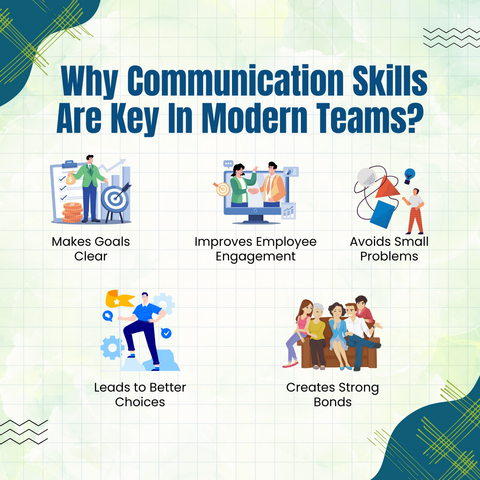
Tech organizations are inherently multidisciplinary, combining engineers, designers, marketers, and data scientists. A leader’s primary role is to empower cross-functional teams by removing silos and aligning incentives. This requires strong communication skills, the ability to mediate between conflicting priorities (e.g., feature velocity vs. code quality), and the willingness to delegate authority. Micromanagement is the enemy of innovation; instead, leaders should set clear objectives and provide the resources needed for autonomous execution.
| Delegation | Increases ownership and accountability | Assigning sprint ownership to a senior engineer |
| Active Listening | Unearths hidden blockers and ideas | Regular one-on-ones with all department heads |
| Conflict Resolution | Prevents toxic friction between teams | Mediating between product and engineering on scope |
| Recognition | Boosts morale and retention | Publicly crediting a team for a successful deployment |
5. Financial Acumen for Technology Businesses
Tech business owners often neglect financial literacy, focusing instead on product features. However, financial acumen is critical—understanding burn rate, unit economics, runway, and the nuances of SaaS metrics (like MRR, ARR, and NDR). Leaders must also grasp the costs of technical infrastructure, cloud services, and talent acquisition. This skill enables them to make smart trade-offs: when to invest in scaling, when to cut costs, and how to structure pricing models that capture value without alienating customers.
6. Resilience and Change Management
The tech industry is notorious for volatility—product launches can fizzle, competitors can disrupt overnight, and global events can shift user behavior. Resilience is the ability to absorb setbacks without losing direction. Coupled with this is change management: the capacity to lead an organization through transitions, whether it’s a pivot in strategy, a merger, or adoption of a new tech stack. Effective leaders communicate the “why” behind changes, provide training, and support teams emotionally during transitions. They also model adaptability by upskilling themselves continuously.
Building a Resilient Culture
Resilience starts at the top. When a leader remains calm during a crisis—such as a data breach or a critical server outage—the team mirrors that composure. Establishing post-mortem rituals and blameless retrospectives helps convert failures into learning opportunities, reinforcing a culture of continuous improvement.
7. Ethical Leadership and Digital Responsibility
As technology permeates every aspect of life, ethical leadership is no longer optional. Business owners must champion digital responsibility—ensuring data privacy, algorithmic fairness, and accessibility. This includes complying with regulations like GDPR or CCPA, but also going beyond compliance to build trust. Leaders should ask tough questions: Is our AI biased? Are we transparent about data usage? Do we have a plan for mitigating potential harm from our products? Ethical missteps can destroy brand reputation rapidly, while ethical leadership becomes a competitive differentiator in a market that values integrity.
- Action steps:
- Create a clear ethics policy for AI and data use.
- Appoint a dedicated privacy or ethics officer (even in small teams).
- Conduct regular audits of security protocols and bias in algorithms.
- Engage with industry standards bodies to stay ahead of regulations.
Conclusion: The Tech Leader as a Bridge
Ultimately, the most successful tech business owners are not just visionaries or coders—they are bridges between technology, people, and market realities. By cultivating strategic vision, data literacy, agile decision-making, team empowerment, financial skill, resilience, and ethical grounding, leaders can steer their companies through uncertainty toward sustainable success. The tech landscape rewards those who lead with both head and heart, and who recognize that true leadership is about building systems and cultures that outlast any single product or trend.

Related Posts