
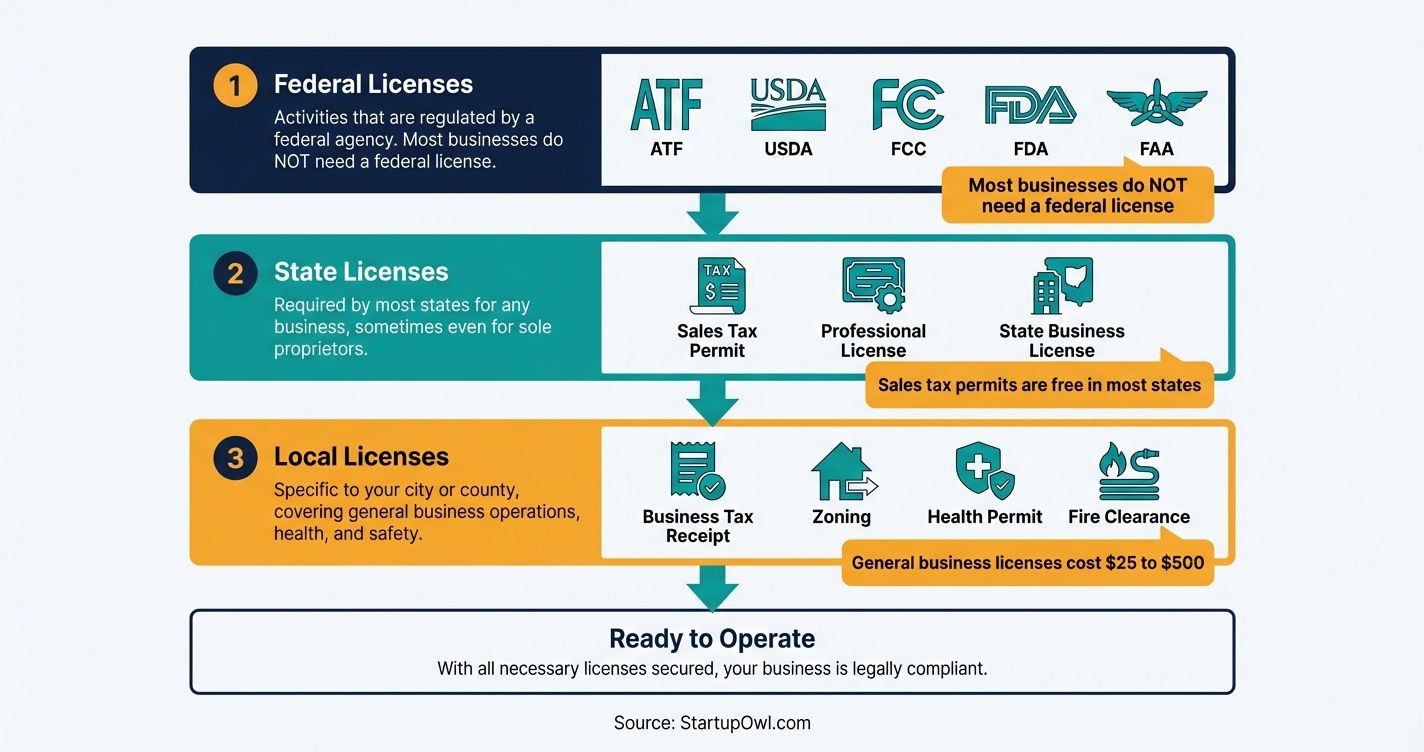
Navigating the regulatory landscape is a critical yet often overlooked aspect of launching and scaling a technology venture. While founders focus on product-market fit, funding, and engineering, failure to secure the correct business licenses and permits can lead to fines, legal injunctions, or even forced closure. This guide provides a technical, state-by-state framework for understanding the distinct categories of licenses and permits required for tech businesses.
Understanding the Distinction: Licenses vs. Permits
Although the terms are frequently used interchangeably, they serve distinct legal functions. A business license is a general authorization to operate within a specific jurisdiction, typically issued by a city or county. A permit, conversely, grants permission to engage in a specific regulated activity—such as data transmission, environmental impact, or professional services.
For tech companies, the distinction becomes critical when dealing with software as a medical device (SaMD), fintech platforms, or drone operations. A general license permits you to open your doors, but a specialized permit authorizes the high-risk activity itself.
Core Business Licenses for Every Tech Company
Regardless of your subsector—SaaS, hardware, or AI development—you will almost certainly require the following foundational licenses:
- General Business License (City/County): Mandatory in virtually all municipalities. This is a prerequisite for opening a business bank account and obtaining tax IDs.
- Employer Identification Number (EIN): Issued by the IRS. Required for hiring employees, filing taxes, and operating as a corporation or partnership.
- State Business Registration: Required if you incorporate as an LLC, C-Corp, or S-Corp. This registers your entity with the Secretary of State.
- Sales Tax Permit (Seller’s Permit): Essential if you sell physical goods (e.g., hardware, software on physical media) or digital products in states with economic nexus laws.
Technology-Specific Permits and Regulatory Compliance
Tech companies face unique regulatory hurdles that transcend standard business licensing. The following table outlines key permits based on your vertical:
| Fintech / Payments | Money Transmitter License (MTL) | State Financial Regulators (e.g., NYDFS, CFPB) |
| HealthTech / SaMD | FDA Registration & 510(k) Clearance | U.S. Food and Drug Administration |
| Drone / UAS Operations | Part 107 Remote Pilot Certificate | Federal Aviation Administration (FAA) |
| Telecommunications / VoIP | Section 214 Authorization | Federal Communications Commission (FCC) |
| Data Brokerage | Data Broker Registration | California (CCPA), Vermont, Maine |
Note: This table is not exhaustive. Always consult with a corporate attorney specializing in your specific technology stack and market.
Digital Services and Home-Based Tech Offices
Many tech startups initially operate from a home office. However, local zoning laws often restrict commercial activity in residential zones. A Home Occupation Permit may be required, particularly if you receive client visits, store inventory (even software CDs or hardware prototypes), or have employee traffic. Failure to secure this permit can result in a cease-and-desist order from the zoning board.
Step-by-Step Process to Obtain Your Licenses
To systematically secure compliance, follow this structured workflow:
Common Pitfalls and How to Avoid Them
Tech founders frequently underestimate the complexity of compliance. Here are the three most common errors:
- Assuming Digital-Only Exemptions: Many founders believe that selling software exclusively online exempts them from state permits. However, states like New York, Texas, and California enforce economic nexus laws—meaning even remote sellers must register and collect sales tax.
- Ignoring Professional Licensing: If your tech company offers consulting (e.g., cybersecurity audits, IT architecture), you may need a professional engineer (PE) license or a certified information systems security professional (CISSP) accreditation, depending on state law.
- Neglecting Employee-Related Permits: Hiring remote workers in multiple states triggers payroll tax registration and workers’ compensation insurance requirements in each state.
Conclusion: Compliance as a Competitive Advantage
Securing the correct business licenses and permits is not merely a bureaucratic hurdle—it is a strategic asset. Investors and enterprise clients increasingly demand proof of regulatory compliance during due diligence. A clean licensing record demonstrates operational maturity and risk mitigation. By systematically addressing your federal, state, and local obligations, you position your tech venture for scalable, lawful growth. Engage a corporate attorney early, maintain meticulous records, and treat compliance as an ongoing operational function, not a one-time project.

Related Posts