

As a tech founder, you have navigated the treacherous waters of product-market fit, secured initial funding, and built a prototype that users actually love. Now, you face a critical inflection point: hiring your first employees. This is not merely about filling a seat; it is about architecting your company’s DNA. A single misstep can set you back months, while a strategic hire can accelerate growth exponentially. The following guide provides a professional framework for this pivotal transition.
1. The Pre-Hire Audit: When to Pull the Trigger
Before posting a job listing, you must conduct a ruthless audit of your own time and bottlenecks. Many founders hire out of fear or impatience, not strategic necessity. You should only hire when the following conditions are met:
- Revenue or Funding Secured: You have at least 6–9 months of runway for the new role, factoring in taxes, benefits, and equipment.
- Operational Pain Is Acute: A critical task (e.g., customer support, code deployment, sales outreach) is consistently failing or blocking your ability to focus on core product strategy.
- The Role Is Defined, Not a Wishlist: You can write a specific, measurable job description. If you cannot, the role is not yet ready.
If you answered “yes” to all three, proceed. Otherwise, consider freelancers, part-time contractors, or automation first.
2. Defining the Role: Skillset vs. Mindset
In a startup, the first employees must be T-shaped: deep expertise in one area (the vertical bar) and broad, adaptable skills across the business (the horizontal bar). For example, a first engineer should not only code but also understand customer pain points and be willing to handle occasional support tickets.
| 1 | Ownership & Bias for Action | No one will tell them what to do. They must self-organize. |
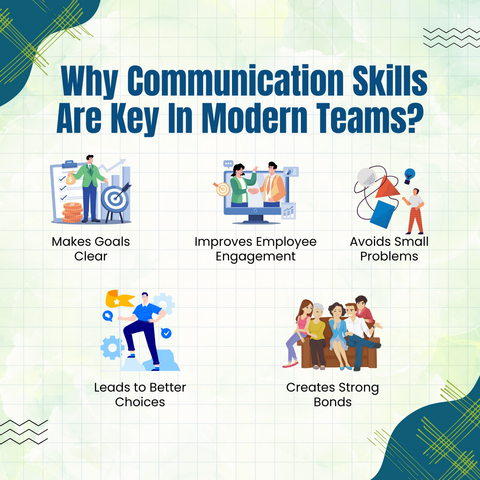
| 2 | Communication Clarity | Remote or in-office, ambiguity kills speed. They must over-communicate. |
| 3 | Technical Competence | They can solve the problem you hired them for, not just learn on the job. |
| 4 | Cultural Contribution | They challenge the status quo respectfully, not just fit in. |
Tip: In interviews, use a “small project test.” Give them a real, low-stakes problem your company faces and observe how they approach it. Their process reveals more than their resume.
3. The Compensation Equation: Equity, Salary, and Transparency
Startups cannot compete with Big Tech salaries—and they shouldn’t try. Instead, you sell the vision, the trajectory, and the equity upside. However, you must still be fair. Use a simple framework:
Warning: Overpaying for the first hire creates a precedent that is impossible to sustain. Underpaying with promises of future riches breeds resentment. Balance is key.
4. The Onboarding Flywheel: First 90 Days
Your first employee’s experience sets the operational playbook for everyone who follows. Treat their onboarding as a product launch. Structure it in three phases:
Week 1: Immersion and Security
- Provide all tool access (GitHub, Slack, Notion) on day one.
- Assign a “buddy” (even if it’s you) for daily 15-minute check-ins.
- Give them a small, low-risk task to achieve a quick win (e.g., fixing a documentation error, closing a minor support ticket).
Weeks 2–4: Ownership Transfer
- Hand off a complete system or process. For example, if they are a marketer, give them full ownership of the blog calendar and lead generation funnel.
- Encourage them to suggest changes to the system immediately. Early hires often see the most obvious inefficiencies.
Months 2–3: Autonomy and Accountability
- Set OKRs (Objectives and Key Results) for the quarter. Review bi-weekly.
- By day 90, they should be able to run their function without your daily input.
5. Avoiding Common Pitfalls
Even the savviest founders stumble. Here are the three most common errors when hiring first employees:
- Hiring for “Cultural Fit” over Competence: You need people who can execute, not just people you want to have a beer with. Competence enables culture; culture alone does not ship code.
- Micromanaging: You hired them to delegate your weaknesses. If you hover, you waste their talent and your time. Trust, but verify through clear metrics.
- Failing to Formalize Processes: Even in a two-person company, document meetings, decisions, and code reviews. Inconsistent handoffs create chaos as the team grows.
6. Scaling Beyond One: The Growth Mentality
Once your first employee is thriving, you must immediately think about the second, third, and fourth. Use your first hire as a force multiplier. Ask them to help you define the next role’s requirements, as they now understand the gaps better than anyone. Create a simple hiring pipeline:
Final Thought: Your First Hire Is Your First Investor
Hiring your first employees is not a transaction—it is a long-term commitment to a shared mission. Choose people who value your product’s purpose as much as its potential valuation. Treat them as partners in building something enduring. When you do, the rest of the team will follow naturally, and your startup will transform from a solo endeavor into a scalable organization.

Related Posts