

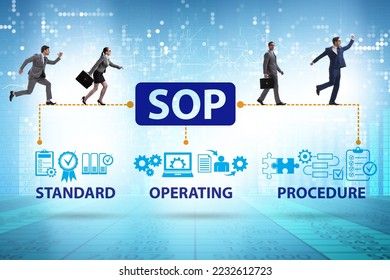
In the fast-paced ecosystem of a startup, chaos often masquerades as agility. Founders wear multiple hats, processes are improvised, and knowledge resides in silos—namely, in the heads of key team members. This ad-hoc approach is a ticking time bomb. As your startup scales, the lack of repeatable, documented workflows leads to errors, bottlenecks, and a fractured culture. This is where Standard Operating Procedures (SOPs) become your most strategic asset. Far from bureaucratic red tape, SOPs are the operating system for your business, enabling you to scale without burning out your team or sacrificing quality.
This guide provides a professional framework for building and implementing SOPs that will transform your startup from a reactive team into a predictable, high-performance engine.
Why Startups Need SOPs: Beyond the “Just Get It Done” Mentality
The first instinct for most startups is to move fast and break things. While velocity is critical, it must be coupled with intentionality. Without SOPs, you face three existential risks:
- Knowledge Loss: When a key employee leaves, years of accumulated know-how walks out the door. SOPs institutionalize that knowledge.
- Inconsistent Quality: A product or service delivered differently by every team member destroys your brand reputation. SOPs create a baseline for excellence.
- Unscalable Onboarding: Every new hire becomes a 1:1 mentoring burden. SOPs allow new team members to become productive in days, not months.
In the tech niche, where precision and speed are currencies, SOPs are not about control—they are about freedom. They automate the mundane decisions so your team can focus on innovation, problem-solving, and strategic growth.
Core Principles for Building Startup SOPs
Before you write a single document, adhere to these principles to ensure your SOPs are adopted, not abandoned.
1. The “Lean First” Approach
Do not try to document everything at once. Use the Pareto Principle: identify the 20% of processes that cause 80% of your pain points. These are your high-priority SOPs—onboarding, customer support escalations, deployment procedures, and financial reporting.
2. Simplicity over Perfection
Your SOP should be executable, not an encyclopedia. Use bullet points, numbered lists, and screenshots. If an SOP takes longer than 10 minutes to read, it is too long. The goal is clarity, not comprehensiveness.
3. Living Documents, Not Relics
Schedule a quarterly review of each SOP. Assign an owner for every document. In a startup, processes evolve weekly. Your SOPs must be version-controlled and immediately editable by the team leads who use them daily.
How to Write an Effective SOP: A Step-by-Step Framework
Every startup SOP should follow a standardized structure. Here is the professional template we recommend:
Here is a practical example for a common startup task: Handling a Production Bug Report.
| 1 | Log the bug in Jira/Linear with severity label | Support Engineer | 15 minutes |
| 2 | Create a Slack alert in #incident channel with link to ticket | Support Engineer | 5 minutes |
| 3 | Assign to the relevant product owner based on severity | Tech Lead | 1 hour |
| 4 | Deploy hotfix via the CI/CD pipeline; run automated tests | Software Engineer | 4 hours |
Implementation: Rolling Out SOPs Without Resistance
The most beautifully written SOPs are useless if your team ignores them. Implementation is a change management challenge. Follow this rollout strategy:
Phase 1: Co-Creation
Do not write SOPs in isolation. Interview the people who do the work daily. Use their language. They will be your biggest advocates and will spot the edge cases you missed.
Phase 2: The “Process Pilot”
Test the SOP on a single team member for a week. Watch them perform the task while referencing the document. Revise based on their friction points. This is your beta test.
Phase 3: Centralized Repository
Store your SOPs in a searchable, cloud-based tool. Avoid buried Google Drive folders. Use a wiki platform like Notion, Confluence, or GitBook. Ensure every new hire is given the link on Day 1.
Key Areas Where Startups Need SOPs Immediately
Prioritize these core functions to maximize operational leverage:
- Engineering: Code review standards, deployment checklist, incident response, data backup protocols.
- Customer Success: Ticket triage, refund policy execution, escalation matrix for VIP clients.
- HR & Onboarding: Equipment setup, tool access provisioning, first-week checklist for new hires.
- Finance: Monthly close process, invoice approval workflow, expense report submission.
- Marketing: Content publishing calendar, social media crisis response, A/B testing protocol for landing pages.
Conclusion: SOPs Are Your Startup’s Immune System
A startup without SOPs is like a high-performance sports car with no brakes—exhilarating, but fatal at speed. By investing in clear, lean, and living documentation, you create a self-correcting organization. Your team gains autonomy, your investors see repeatability, and you free up the founder’s mental energy for what truly matters: vision, strategy, and culture.
Start with one broken process today. Document it. Share it. Iterate on it. This is not busywork; it is the foundation of scalable execution. Your future self—and your future team—will thank you.

Related Posts